Contents
Search for "best niches to sell on eBay" and you'll find lists recommending clothing, electronics, toys, sneakers, collectibles, and dozens of other categories.
The problem is that no list can tell you what you can actually find, source, and sell.
A better way to find a niche is to start with what's available to you and then use eBay itself to discover where buyers already exist.
You don't have to guess your niche. You can research your way into one.
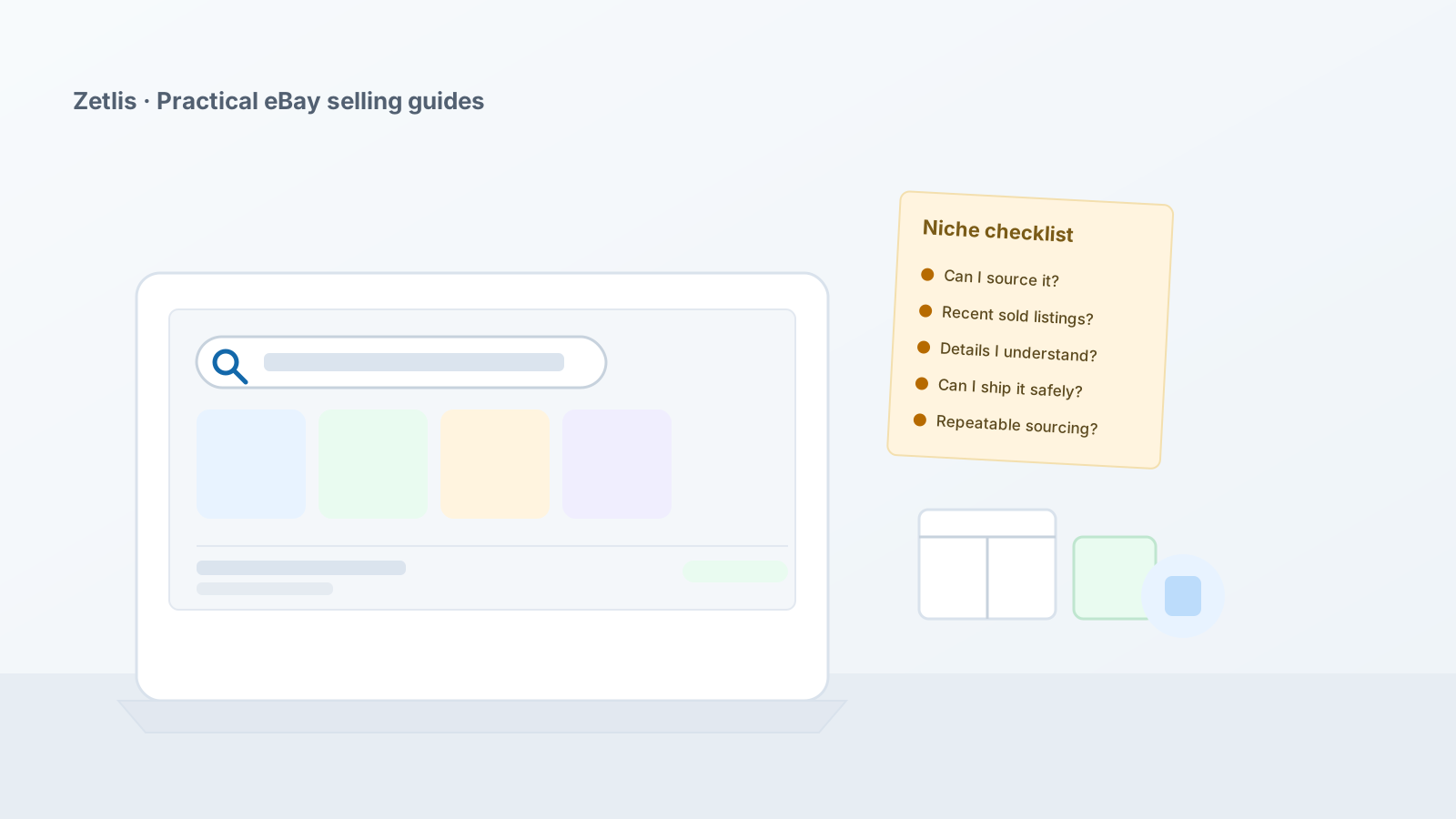
Start With What You Can Find
Think about the products you already have access to.
Maybe you have great thrift stores nearby. Garage sales. Clearance stores. Used electronics. Toys. Clothing. Parts. Products in a category you already understand.
Or maybe you have access to a supplier that can provide certain products consistently.
That matters.
Finding something profitable once is useful. Being able to source it again after it sells can turn an opportunity into something repeatable.
You don't need to immediately decide:
"My niche is vintage clothing."
Start with a few ideas and investigate.
A broad category can lead you somewhere much more specific.
You might start researching toys and discover that certain replacement parts sell separately. Search electronics and notice demand for remotes for older TV models. Start with clothing and find buyers looking for particular styles, brands, or sizes.
The market itself can help you find the niche.
Let eBay Show You What's Selling
Take one of those ideas and search for it on eBay.
Then look at recently sold listings.
Don't focus on one exceptional sale. Look for patterns.
Are similar products selling regularly? Do certain brands, models, sizes, or versions appear repeatedly? Is there a price range you see again and again?
You may start with something broad and discover that one specific part of that category seems to sell particularly well.
That's where an idea starts becoming an opportunity.
Instead of asking:
"What should I sell?"
you start asking:
"What are people already buying?"
eBay Product Research can also help with this investigation by providing information about sales, prices, and marketplace trends.
Follow the Patterns
The more you research, the more details begin to appear.
Maybe certain models sell more frequently.
Maybe one brand reaches better prices.
Maybe particular sizes are in higher demand.
Maybe parts and accessories sell separately.
Maybe used versions have much more demand than you expected.
These patterns can turn a huge category into something you can recognize and source.
"Electronics" is enormous.
"Replacement remotes for older TV models" is a direction.
"Toys" is enormous.
"Parts and accessories for specific toy lines" is another.
A good niche doesn't have to be something nobody else has discovered. It needs to be something you can recognize when you find it.
And if you have a supplier or reliable source for those products, even better. Once something sells, you already know where to look for the next one.
See Where You Could Fit In
Once you find sales, look at the active listings too.
Don't be discouraged simply because other sellers are already there.
Competition can also be evidence that a market exists.
What you want to discover is whether there's room for you to participate.
Maybe some versions have less supply. Maybe particular models appear frequently among sold listings but are harder to find among active listings. Maybe there's simply a large market with buyers and sellers entering every day.
You aren't necessarily looking for a secret niche with no competition.
You're looking for an opportunity where you can sell too.
Found Something Interesting? Test It
You don't need to finish your research by declaring:
"I found my perfect niche."
Found something that appears to sell, that you can source, and that looks interesting?
That's enough to investigate further.
Before buying a large quantity, test the opportunity.
Our guide on how to validate product demand before buying eBay inventory explains how to compare demand and supply, look at the numbers, and start with a small quantity before scaling.
That's how an idea can become something you buy and sell repeatedly.
You Don't Have to Stay in One Niche
Finding a niche doesn't mean committing to it forever.
You might sell in one niche today and discover another opportunity six months from now. You might work in several niches at the same time. You might expand into related products, or move away from a niche because sourcing becomes harder or buyer demand changes.
That's normal.
A niche is a direction, not a restriction.
The advantage of learning how to research opportunities is that you can use the same process again whenever the market changes or you want to try something new.
And when you start testing products, Zetlis can turn your product photos into a complete eBay listing, including three complete, ready-to-use titles, suggested keywords, description, category, and listing details, ready to publish directly to your eBay account.
Start with what you can find. See what's selling. Follow the patterns. Test the opportunities you discover.
You don't have to guess your niche.
Let the market help you find it — and change direction whenever a better opportunity appears.
Sources
Write perfect eBay titles in seconds
Upload a photo of any product and Zetlis's AI generates an optimized title, description, keywords, and category — ready to publish to eBay instantly.
Try Zetlis free →No credit card required · Start with 10 free listings